Non-surgical treatment of foreskin problems
Most circumcisions performed on boys during childhood and adolescence are unnecessary: they are the result of inadequate knowledge of anatomy, unawareness of alternatives, poor judgement or misdiagnosis of foreskin problems. (1-4) In the rare instances where there is a genuinely pathological condition, circumcision is often prescribed when kinder, less ruthless, cheaper and non-injurious treatments, not involving amputation, are just as effective. (5-7)
Appropriate Care of the Foreskin
Most foreskin problems can be avoided with proper care of the normal (uncut) penis.
During the first few years of life, the inside fold of a male's foreskin is normally stuck to the glans. (8-10) The separation these two structures occurs slowly and naturally over time; this process should never be hurried. Attempts to separate them and pull the foreskin back prematurely will damage the elasticity of the preputial sphincter, and cause injury, scarring and infection, sometimes so severe that circumcision may be needed later.
The foreskin is usually retractable by age eighteen. (10) Even if the glans and foreskin separate before then, the foreskin may still not be retractable because the opening of the foreskin may still be very tight and only flexible enough to allow the passage of urine. (11, 12) The foreskin is meant to work like this, just like a valve: letting urine out, but not letting dirt in. That is why it is so tight. The first person to retract a child's foreskin should always be the boy himself. (13) Forcing the foreskin back is usually painful and can cause problems, such as infection, adhesions, and/or acquired (genuine) phimosis. (13)
Causes of a Reddened Foreskin
When the tip of the foreskin becomes reddened, it is doing its job of protecting the glans and urinary meatus. (14) Ammoniacal dermatitis, commonly known as diaper rash, results when bacteria in the feces react with urine. (14)
Other causes include:
-
too much exposure to soiled diapers
-
bubble baths
-
highly chlorinated water (swimming pools, hot tubs)
-
use of soap on the genitals
-
laundry soap or detergent on clothing
-
antibiotics (microbial flora can be restored by eating live culture yogurt)
-
concentrated urine from dehydration.
Drinking water, soaking in warm baths, bacterial replacement therapy (liquid Acidophilus culture ingested and applied to the foreskin 4-6 times a day), and running around with a bare bottom all help healing. (14)
Criteria for Medically Indicated Surgery
According to the Heath Care Financing Administration (USA - but similar rules apply in other countries), a medically indicated circumcision requires a patient complaint, a diagnosis of pathology or physical abnormality, and conservative treatment for a diagnosed condition prior to surgery. (15) Circumcision of infants does not meet the criteria for a medically necessary surgery because there is no documented pathology, no physical abnormality, and no complaint on the part of the patient. (16-18) Routine circumcision is therefore non-therapeutic. The American Medical Association says: "The term 'non-therapeutic' is synonymous with elective circumcisions that are still commonly performed on newborn males in the United States." (19)
Male circumcision is traumatic, (20) destructive, (21) removes protective and erogenous tissue, (21) and is therefore not in the best interest of the patient. (22) Male post-neonatal circumcision is not medically justified except in rare circumstances, and only after all less invasive alternatives have been attempted. (23)
Common Reasons Wrongly Used to Justify Circumcision after the Neonatal Period
The following are the most common reasons inappropriately given to circumcise children after the neonatal period.
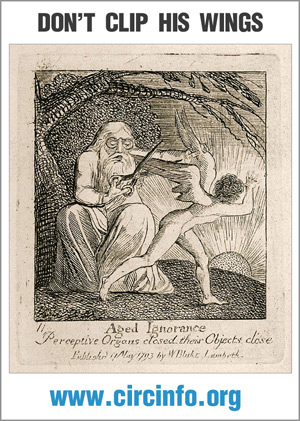 Social factors
So that children resemble their peers; or because immigrants adopt what they consider a "social norm"; or because parents want their children to conform to the majority or customary practice of their own particular ethnic or religious sub-culture. Of course, it would follow that in a society where the majority of boys were not circumcised, parents would want them to conform by keeping their foreskins. Since on a world scale most men are not circumcised, and populations are highly mobile these days, the uniformity policy would dictate that boys remained uncircumcised.
Phimosis
Most physicians in the United States receive little or no education about the structure, functions, development and care of the normal intact penis. Consequently, they may diagnose a problem that simply does not exist. The non-retractable foreskin is normal in childhood, and it becomes retractable only with increasing maturity (10, 24); this process usually requires no treatment other than reassuring parents that their child is perfectly normal and healthy. (2, 23) The American Academy of Pediatrics guidelines state that the foreskin may not retract until the age of eighteen. (25) Unless it is causing discomfort, it is no big deal if the foreskin never becomes fully retractable: many men have a phimotic condition all their lives and are perfectly happy with it. Even if it is occasionally a nuisance, they obviously prefer that to the radical alternative - having no foreskin.
Although the English paediatrician Douglas Gairdner debunked the myth of infantile phimosis in 1949, (9) he gave inaccurate information about the age by which foreskin retraction should be possible, asserting that it should be retractable by three years or five at the latest. This is too hasty. Wright (1994) calls Gairdner's figures inaccurate (13), yet many practicing physicians learned this "fact" at medical school. Consequently, many physicians do not properly understand the normal development of the penis.
Øster (1968) (10) and Kayaba (1996) (24) provide accurate data. According to Øster, 23% of boys in the 6-7-year-old-age group have fully retractable foreskins. By age 10-11, retractibility increases to 44%; in the 14-15-year-old group, 75% are retractable, and in the 16-17-year-old group, 95% are retractable. Kayaba's figures are similar. Kayaba found that 16.7% of 3-4-year-old boys had fully retractable foreskins. For the 11-15-age group, this figure increased to 62.9%.
Balanitis Xerotica Obliterans (BXO)
Phimosis caused by balanitis xerotica obliterans (BXO) is recognizable by a whitish ring of indurated (hardened) tissue near the tip of the foreskin and this constriction prevents foreskin retraction. (26, 27) Diagnosis of BXO, an uncommon condition affecting 0.6% to 1% of boys by their fifteenth birthday, is confirmed by biopsy. BXO is normally treatable without surgery. (28)
Non-surgical Standard of Treatment of Foreskin Pathologies
Adult phimosis
If a non-retractile foreskin (not BXO-related) causes problems, such as pain with erections or tearing, retraction can be achieved by gentle stretching techniques (29) and/or treatment with a topical steroid ointment (betamethasone valerate 0.05% or clobetasol proprionate 0.05%) for 30 to 60 days. (5-7) Those rare cases that are unresponsive to stretching techniques and/or medical treatment may be treated with preputioplasty, a conservative minimal surgery. This takes the form of a limited dorsal slit with transverse closure, (30-32) or lateral slits with transverse closure. (33) Trauma, pain, and morbidity are much lower than with traditional circumcision. (30-33)
Recurrent balanitis
Physical trauma, irritants, excessive washing, soap, or infection are the usual causes of balanitis (inflammation of the glans), which may be protozoal, fungal, viral, bacterial, or amoebic in nature. The causative factor may be difficult to diagnose. Escala and Rickwood recommend taking a swab; (34) Birley and Edwards recommend biopsy. (34)
Appropriate treatment cannot be decided until correct diagnosis of the causative factor has been determined. (34-36) If balanitis is caused by trauma such as "foreskin fiddling" or premature forcible retraction, the traumatic actions need to cease. (34) If recurrent washing and/or the use of soap or other irritants cause balanitis, the washing should be stopped and the irritant avoided. (36) If balanitis is caused by infection, the appropriate antibiotic should be selected for the specific organism. (35) The proper treatment is medical, not surgical. The foreskin should be left intact so that its protective effect (37) may aid in the treatment.
Escala and Rickwood advise circumcision of boys only "after recurrent attacks of balanitis which cause appreciable discomfort". (34) Birley and colleagues hesitate to recommend circumcision except in cases of plasma cell (Zoon's balanitis) and lichen sclerosis, but state that it may be helpful if the balanitis is recurrent. (36) They note, however, that several of their balanitis patients were circumcised men, demonstrating that circumcision did not prevent balanitis. (36) Edwards recommends circumcision only when the balanitis is Zoon's balanitis or the balanitis of Queyrat. (35) Circumcision may not reduce the incidence of balanitis in boys. Preston states that "balanitis is uncommon in childhood when the prepuce is performing its protective function." (17) Van Howe found increased incidence of balanitis in circumcised boys. (38)
There is little evidence and no proof that circumcision for balanitis is an efficacious treatment. The proper treatment is accurate diagnosis of the cause of inflammation by inquiry, culture, or biopsy. Once the etiology of balanitis is determined, irritants must eliminated and proper treatment provided.
Yeast infections with diabetes mellitus
Some non-circumcised males with diabetes mellitus have recurrent yeast infections caused by high sugar content in the urine. Careful control of blood sugar will reduce infections, as will ingestion and application of Acidophilus culture (bacterial replacement therapy).
Valid Indications for Post-neonatal Circumcision
The following rare conditions may indicate treatment with circumcision:
Frostbite
If the foreskin is frostbitten to the point of necrosis, partial or full amputation may be required.
Gangrene
Individuals with diabetes or chronic alcoholism have been known to have circulatory problems that result in gangrene of the foreskin. Circumcision is indicated in this rare condition.
Malignancy (cancer)
Should a foreskin malignancy (cancer) develop, circumcision is indicated. Malignancies are extremely rare.
Conclusion
Good medical practice requires that doctors keep abreast of advances in the treatment of disease. (23) The decade of the 1990s has seen appreciable advances in the treatment of disease of the prepuce. Adherence to outmoded treatment after better treatment becomes available may create vulnerability to medico-legal complications. (39) The information provided in this document will help doctors keep abreast of the changes in treatment modalities for common foreskin problems.
References
1. Rickwood AMK, Walker J. Is phimosis overdiagnosed in boys and are too many circumcisions performed in consequence? Ann R Coll Surg Engl 1989;71(5):275-7. URL: http://www.cirp.org/library/treatment/phimosis/rickwood2/
2. Griffiths D, Frank JD. Inappropriate circumcision referrals by GPs. J R Soc Med 1992;85:324-325. URL: http://www.cirp.org/library/procedure/griffiths-frank/
3. Gordon A, Collin J. Saving the normal foreskin. BMJ 1993; 306: 1-2. URL: http://www.cirp.org/library/general/gordon/
4. Williams N, Chell J, Kapila L. Why are children referred for circumcision. BMJ 1993; 306: 28. URL: http://www.cirp.org/library/general/williams/
5. Van Howe RS. Cost-effective treatment of phimosis. Pediatrics 1998; 102(4)/e43. URL: http://www.pediatrics.org/cgi/content/full/102/4/e43
6. Dewan PA, Tieu HC, and Chieng BS. Phimosis: is circumcision necessary? J Paediatr Child Health 1996;32:285-289. URL: http://www.cirp.org/library/treatment/phimosis/dewan/
7. Berdeu D, Sauze L, Ha-Vinh P. Blum-Boisgard C. Cost-effectiveness analysis of treatments for phimosis: a comparison of surgical and medicinal approaches and their economic effect. BJU 2001;87(3):239-244. URL: http://www.cirp.org/library/treatment/phimosis/berdeu1/
8. Deibert, GA. The separation of the prepuce in the human penis. Anat Rec 1933;57:387-399. URL: http://www.cirp.org/library/anatomy/deibert/
9. Gairdner D. The fate of the foreskin. Br Med J 1949; 2:1433-1437. URL: http://www.cirp.org/library/general/gairdner/
10. Øster J. Further fate of the foreskin. Arch Dis Child 1968; 43:200-203. URL: http://www.cirp.org/library/general/oster/
11. Spence J. On Circumcision Lancet 1964;2:902. URL: http://www.cirp.org/library/general/spence1/
12. Catzel P. The normal foreskin in the young child. SA Mediese Tysskrif [South African Medical Journal] 1982; 62:751 URL: http://www.cirp.org/library/normal/catzel/
13. Wright JE. Further to the "Further Fate of the Foreskin". Med J Aust 1994; 160: 134-135. URL: http://www.cirp.org/library/normal/wright2/
14. Questions about your son's intact penis. San Anselmo: National Organization of Circumcision Information Resource Centers, 1997. URL: http://www.nocirc.org/publish/pam4.html
15. Eileen Wayne, MD. Private Communication.
16. Leitch IOW. Circumcision - a continuing enigma. Aust Paediatr J 1970;6:59-65. URL: http://www.cirp.org/library/general/leitch1/
17. Preston EN. Whither the foreskin. JAMA 1970; 213(11):1853-1858. URL: http://www.cirp.org/library/general/preston/
18. Grimes DA. Routine circumcision of the newborn: a reappraisal. Am J Obstet Gynecol 1978; 130(2): 125-129. URL: http://www.cirp.org/library/general/preston/
19. Council on Scientific Affairs, American Medical Association. Report 10: Neonatal circumcision. Chicago: American Medical Association, 1999.URL: http://www.ama-assn.org/ama/pub/article/2036-2511.html
20. Boyle GJ, Goldman R, Svoboda JS, Fernandez E. Male circumcision: pain, trauma and psychosexual sequelae. J Health Psychology 2002;7(3):329-43. URL: http://www.cirp.org/library/psych/boyle6/
21. Taylor JR, Lockwood AP, Taylor AJ. The prepuce: specialized mucosa of the penis and its loss to circumcision. Br J Urol 1996;77:291-295. URL: http://www.cirp.org/library/psych/boyle6/
22. Re "J" (Child's religious upbringing and circumcision) [1999] 2 FCR 34. URL: http://www.cirp.org/library/legal/Re_J/
23. Committee on Medical Ethics. Circumcision of Male Infants: Guidance for Doctors. London: British Medical Association, 1996. URL: http://www.cirp.org/library/statements/bma/
24. Kayaba H, Tamura H, Kitajima S, et al. Analysis of shape and retractability of the prepuce in 603 Japanese boys. J Urol 1996;156(5):1813-1815. URL: http://www.cirp.org/library/normal/kayaba/
25. Care of the Uncircumcised Penis, Elk Grove Village, IL: American Academy of Pediatrics, 1999. [leaflet]. URL: http://www.cirp.org/library/normal/aap1999/
26. Rickwood AMK, Hemalatha V, Batcup G, Spitz L. Phimosis in Boys. Brit J Urol 1980;52:147-150, URL: http://www.cirp.org/library/treatment/phimosis/rickwood/
27. Rickwood AMK. Medical Indications for circumcision. BJU Int 1999;83 Suppl. 1:45-51.
28. Jorgensen ET, Svensson A. Problems with the penis and prepuce in children: Lichen sclerosus should be treated with corticosteroids to reduce need for surgery. BMJ 1996;313:692. URL: http://bmj.com/cgi/content/full/313/7058/692
29. Beaugé M. Conservative Treatment of Primary Phimosis in Adolescents [Traitement Médical du Phimosis Congénital de L'Adolescent]. Saint-Antoine University, Paris VI, 1990-1991. URL: http://www.cirp.org/library/treatment/phimosis/beauge/
30. Cuckow PM, Rix G, Mouriquand PDE. Preputial plasty: a good alternative to circumcision. J Pediatr Surg 1994;29(4):561-563. URL: http://www.cirp.org/library/treatment/phimosis/cuckow/
31. de Castella H. Prepuceplasty: an alternative to circumcision. Ann R Coll of Surg Engl 1994;76(4):257-8. URL: http://www.cirp.org/library/treatment/phimosis/decastella/
32. Saxena AK, Schaarschmidt K, Reich A, Willital GH. Non-retractile foreskin: a single center 13-year experience. Int Surg 2000;85(2):180-3. URL: http://www.cirp.org/library/treatment/phimosis/saxena1/
33. Lane TM, South LM. Lateral preputioplasty for phimosis. J R Coll Surg Edinb 1999;44(5):310-2. URL: http://www.cirp.org/library/treatment/phimosis/south1/
34. Escala JM, Rickwood AMK. Balanitis. Brit J Urol 1989;63:196-197.URL: http://www.cirp.org/library/disease/balanitis/escala1/
35. Edwards S. Balanitis and balanoposthitis: a review. Genitourin Med 1996;72(3):155-9. URL: http://www.cirp.org/library/disease/balanitis/edwards1/
36. Birley HDL, Luzzi GA, Bell R. Clinical features and management of recurrent balanitis: association with atopy and genital washing. Genitourin Med 1993;69:400-403. URL: http://www.cirp.org/library/disease/balanitis/birley/
37. Fleiss P, Hodges F, Van Howe RS. Immunological functions of the human prepuce. Sex Trans Inf 1998;74:364-367. URL: http://www.cirp.org/library/disease/STD/fleiss3/
38. Van Howe RS. Variability in penile appearance and penile findings: a prospective study. Brit J Urol 1997;80:776-782. URL: http://www.cirp.org/library/complications/vanhowe/
39. Fisher TL. Outmoded treatment. Can Med Assoc J 1966;95:630. URL: http://www.cirp.org/library/legal/fisher1/
National Organisation of Circumcision Information Resource Centres
San Anselmo, California
July 2002